Long-distance dispersal boosts Xylella epidemics
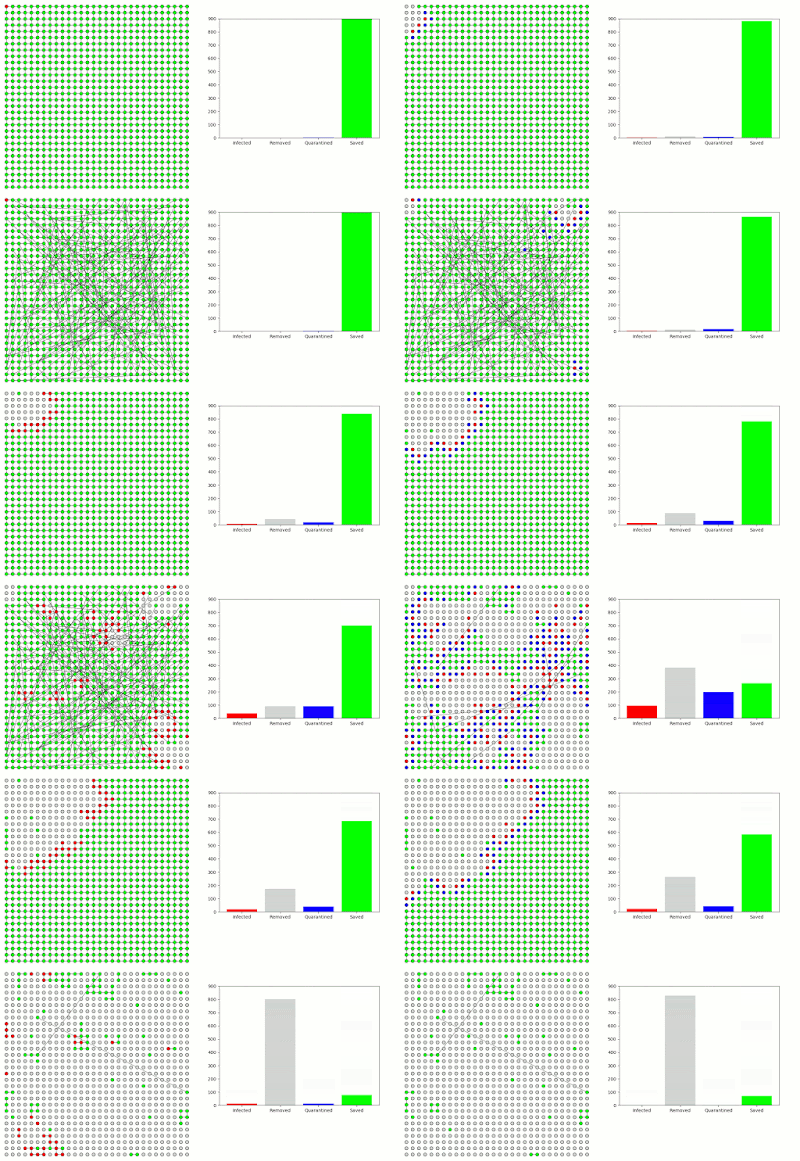
Outbreaks of a plant disease in a landscape can be meaningfully modelled using networks with nodes representing individual crop-fields, and edges representing potential infection pathways between them. Their spatial structure, which resembles that of a regular lattice, makes such networks fairly robust against epidemics. Yet, it is well-known how the addition of a few shortcuts can turn robust regular lattices into vulnerable ‘small world’ networks. Although the relevance of this phenomenon has been shown theoretically for networks with nodes corresponding to individual host plants, its real-world implications at a larger scale (i.e. in networks with nodes representing crop fields or other plantations) remain elusive. Focusing on realistic spatial networks connecting olive orchards in Andalusia (Southern Spain), the world’s leading olive producer, we show how even very small probabilities of long distance dispersal of infectious vectors result in a small-world effect that dramatically ...