Posts

Showing posts with the label physiologically based models

Invasive potential of tropical fruit flies in temperate regions under climate change

Image
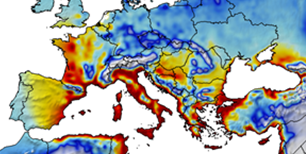
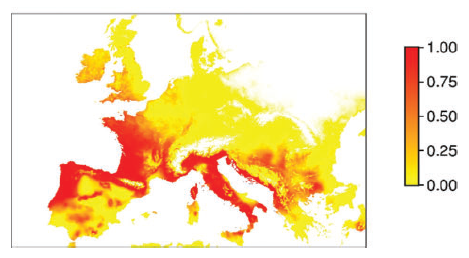
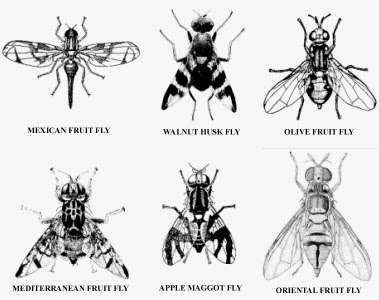
Tropical fruit flies are considered among the most economically important invasive species detected in temperate areas of the United States and the European Union. Detections often trigger quarantine and eradication programs that are conducted without a holistic understanding of the threat posed. Weather-driven physiologically-based demographic models are used to estimate the geographic range, relative abundance, and threat posed by four tropical tephritid fruit flies (Mediterranean fruit fly, melon fly, oriental fruit fly, and Mexican fruit fly) in North and Central America, and the European-Mediterranean region under extant and climate change weather (RCP8.5 and A1B scenarios). Most temperate areas under tropical fruit fly propagule pressure have not been suitable for establishment, but suitability is predicted to increase in some areas with climate change. To meet this ongoing challenge, investments are needed to collect sound biological data to develop mechanistic models to predict...

Why was the invasion risk of Tuta absoluta underestimated?

Image
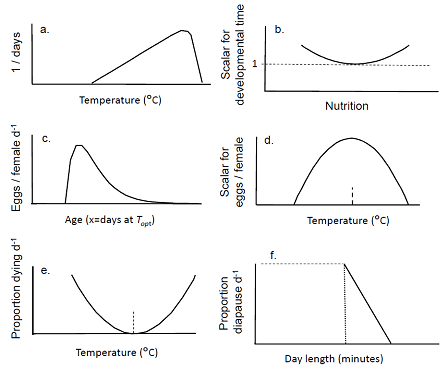
The capacity to assess invasion risk from potential crop pests before invasion of new regions globally would be invaluable, but this requires the ability to predict accurately their potential geographic range and relative abundance in novel areas. This may be unachievable using de facto standard correlative methods as shown for the South American tomato pinworm Tuta absoluta , a serious insect pest of tomato native to South America. Its global invasive potential was not identified until after rapid invasion of Europe, followed by Africa and parts of Asia where it has become a major food security problem on solanaceous crops. Early prospective assessment of its potential range is possible using physiologically based demographic modeling that would have identified knowledge gaps in T. absoluta biology at low temperatures. Physiologically based demographic models (PBDMs) realistically capture the weather-driven biology in a mechanistic way allowing evaluation of invasive risk in novel ar...

Bio-economic analysis of coffee berry borer control

Image
 Coffee, after petroleum, is the most valuable commodity globally in terms of total value (harvest to coffee cup). Here, our bioeconomic analysis considers the multitude of factors that influence coffee production. The system model used in the analysis incorporates realistic field models based on considerable new field data and models for coffee plant growth and development, the coffee/coffee berry borer (CBB) dynamics in response to coffee berry production and the role of the CBB parasitoids and their interactions in control of CBB. Cultural control of CBB by harvesting, cleanup of abscised fruits, and chemical sprays previously considered are reexamined here to include biopesticides for control of CBB such as entomopathogenic fungi (Beauveria bassiana, Metarhizium anisopliae) and entomopathogenic nematodes (Steinernema sp., Heterorhabditis). The bioeconomic analysis estimates the potential of each control tactic singly and in combination for control of CBB. The analysis explains ...

Deconstructing screwworm eradication

Image
Before its eradication from North America, the subtropical‐tropical new world screwworm fly Cochliomyia hominivorax (Coquerel) invaded southwestern temperate areas of the U.S.A., where it caused myiasis in wildlife and livestock. Outbreaks of the fly occurred during years when adult migrants were carried northward on North American monsoon winds from the northern areas of Mexico and south Texas. We deconstruct, retrospectively, the biology and the effect of weather on the eradication of the fly in North America. Screwworm was found to be an ideal candidate for eradication using the sterile insect technique (SIT) because females mate only once, whereas males are polygynous, and, although it has a high reproductive potential, field population growth rates are low in tropical areas. In northern areas, eradication was enhanced by cool‐cold weather, whereas eradication in tropical Mexico and Central America is explained by the SIT. Despite low average efficacy of SIT releases (approximately...

Bioeconomic approach to grape under climate change

Image
( This paper made cover story .) Of fruit crops, grape is the most largely cultivated and has the highest economic importance globally; it is part of the Mediterranean bio-cultural heritage that is threatened by climate change. However, the analysis of the climate effects on grape and other crop and natural ecosystems on a regional scale has been vexing. Here, we review how sparse physiologically based demographic models (PBDM) in the context of the geographic information system GRASS GIS can be used to examine the effects of the extant weather and climate change on the dynamics of the interaction between grape and European grapevine moth across the Euro-Mediterranean region. Further, by including management-relevant complexity in a mechanistic way, the PBDM/GIS system provides the basis for a regional bioeconomic analysis of the grape system and a template for similar analyses that require modest data and funding. Ponti L., Gutierrez A.P., Boggia A., Neteler M., 2018. Analysis of ...

Impact of the rosette weevil on yellow starthistle

Image
Yellow starthistle ( Centaurea solstitialis L.) (YST) is an invasive weed native to the Mediterranean region with a geographical centre of diversity in Turkey. It is widely established in Chile, Australia, and western North America. It arrived in California as a contaminant in alfalfa seed in 1859 and, by 2002, had infested more than 7.7 million hectares in the U.S.A. Biological control of YST using capitula feeding weevils, picture wing flies and a foliar rust pathogen has been ongoing in the western U.S.A. for more than three decades with limited success. Modelling and field research suggest natural enemies that kill whole plants and/or reduce seed production of survivors are good candidates for successful biological control. A candidate species with some of these attributes is the rosette weevil Ceratapion basicorne (Illiger). In the present study, a model of the rosette weevil is added to an extant system model of YST and its capitula feeding natural enemies and, in a GIS context...

Earth observation: bridging the gap to crop-pest systems

Image
The workshop " When Space Meets Agriculture " aimed at promoting a better understanding of the significance and potential of Europe’s space systems (EGNOS/Galileo and Copernicus) for the agricultural sector. While introducing Rural Development Programmes of selected regions and exploring opportunities to set synergies for the development of space applications for the agriculture sector, it will present the main strands of the European Agriculture Policy and more generally link the space community to the agriculture community. Our contribution identified recent and prospective holistic analyses of climate change effects on crop-pest systems in the Mediterranean Basin. The approach used in the analyses involves using physiologically based demographic modeling (PBDM) of crop-pest-natural enemy interactions in the context of a geographic information system (GIS). A major goal is to link the PBDM/GIS technology with increasingly available biophysical datasets from global modeling ...

Crop-pest dynamics in the Mediterranean Basin

Image
Climate change will make assessing and managing crop-pest systems in the Mediterranean Basin more difficult than elsewhere on the globe. The Basin is in many ways a hot spot of global change, as higher than average projected climate change threatens an extremely rich and intertwined biological and cultural diversity, and increases its vulnerability to biological invasions. As a consequence, pest problems in this hot spot will require a holistic approach to deconstruct the elusive complex interactions that are the underpinning basis for sound decision making at the field level. Building on 30+ years of multidisciplinary progress inspired by pioneering work at University of California , the ENEA GlobalChangeBiology project in collaboration with CASAS Global is developing an interdisciplinary tool to mechanistically describe (i.e., model), analyze and manage agro-ecological problems based on the unifying paradigm that all organisms including humans acquire and allocate resources by analog...

Invasiveness of spotted wing Drosophila

Image
The polyphagous Asian vinegar fly Drosophila suzukii (spotted wing Drosophila) is a native of Eastern and Southeastern Asia. It emerged as an important invasive insect pest of berries and stone fruits in the Americas and Europe beginning in 2008. Species distribution models are commonly used for analyzing the extant and potential range expansion of invasive species. Previous modeling efforts for D. suzukii include a degree-day model, a MaxEnt ecological niche model, a demographic model incorporating the effects of temperature, and a preliminary mechanistic physiologically-based demographic model (PBDM). In the present analysis, we refine the PBDM for D. suzukii based on biological data reported in the literature. The PBDM is used to assess the effects of temperature and relative humidity from a recently published global climate dataset (AgMERRA) on the prospective geographic distribution and relative abundance of the pest in the USA and Mexico, and in Europe and the Mediterranean Ba...

Traditional farming and the Mediterranean diet

Image
The Mediterranean diet is described by the UNESCO Cultural Heritage of Humanity website ( http://www.unesco.org/culture/ich/en/RL/00884 ) as encompassing more than just food of the various cultures. These diets are embedded in bio-cultural landscapes that are at risk from global markets, industrial agriculture, invasive species and climate change, and yet little research aimed at conserving this Mediterranean agricultural heritage is being conducted. A focus on preserving traditional Mediterranean agricultural systems provides unique opportunities to link UNESCO-SCBD’s Joint Programme on Biological and Cultural Diversity ( http://www.cbd.int/lbcd/ ​) and FAO’s Globally Important Agricultural Heritage Systems initiative (GIAHS, http://www.fao.org/giahs/ ) with the goal of developing strategies and policy to preserve this heritage and the food production systems that are its basis for future generations. An important step in this direction is the development of holistic ecosystem-level a...

Indian cotton: weather, yields and suicides

Image
Cotton with coevolving pests has been grown in India for more than 5000 years. Hybrid cotton was introduced in the 1970s with increases in fertilizer and in insecticide use against pink bollworm that caused outbreaks of bollworm. Hybrid Bt cotton, introduced in 2002 to control bollworm and other lepidopteran pests, is grown on more than 90 % of the cotton area. Despite initial declines, year 2013 insecticide use is at 2000 levels, yields plateaued nationally, and farmer suicides increased in some areas. Biological modeling of the pre-1970s cotton/pink bollworm system was used to examine the need for Bt cotton, conditions for its economic viability, and linkage to farmer suicides. Yields in rainfed cotton depend on timing, distribution, and quantity of monsoon rains. Pink bollworm causes damage in irrigated cotton, but not in rainfed cotton unless infested from irrigated fields. Use of Bt cotton seed and insecticide in rainfed cotton is questionable. Bt cotton may be economic in irrigat...

Agrobiodiversity in a changing world

Image
Exotic species that invade new areas cause economic loss annually nearly tenfold that of natural disasters. The economic impact of such biological invasions has been considerable also in agriculture, with many major agricultural pests being invasive species, which number is expected to increase given the combined action of climate warming and globalization, particularly in the Mediterranean Basin. This region is rich in natural and agricultural biodiversity but also considerably vulnerable to biological invasions that threaten key elements of Mediterranean agro-biodiversity such as the traditional perennial crops grape and olive. Currently, most major threats to grape and olive culture are invasive species - often vector borne diseases so serious that the only control method is removal and destruction of infected crop plants. However, how to assess the potential impact of such invasive threats, and hence how to manage them, remains an unresolved and largely unexplored problem. Gaps exi...

Risk assessment for tiger mosquito in Europe

Image
The Asian tiger mosquito ( Ae. albopictus ) is indigenous to the oriental region, but is now widespread throughout the world. It is an aggressive mosquito, which causes nuisance and is well known vector of important human disease. It is one of the world’s most invasive species and is now invading Europe by both natural means and human assisted dispersal. Currently, there is no consensus on the limits of its potential geographic distribution in Europe. For this reason, studying the role that environmental driving variables, mainly temperature, play in determining the spatial variation of the potential population abundance of the mosquito should be considered a high priority. To assess the risk posed by Ae. albopictus to Europe, a lattice model based on the temperature-dependent physiologically based demographic modelling approach has been developed and is being tested against field observations. The area of potential distribution of this insect is simulated as driven by current climate...

Remote sensing and invasive species

Image
A crucial step in evaluating the impact of invasive species is to map changes in their actual and potential distribution and relative abundance across wide regions over an appropriate time span. While direct and indirect remote sensing approaches have long been used to assess the invasion of plant species, the distribution of invasive animals is mainly based on indirect methods that rely on environmental proxies of conditions suitable for colonization by a particular species. The aim of this article is to review recent efforts in the predictive modelling of the spread of both plant and animal invasive species using remote sensing, and to stimulate debate on the potential use of remote sensing in biological invasion monitoring and forecasting. Rocchini D., Andreo V., Förster M., Garzon-Lopez C.X., Gutierrez A.P., Gillespie T.W., Hauffe H.C., He K.S., Kleinschmit B., Mairota P., Marcantonio M., Metz M., Nagendra H., Pareeth S., Ponti L., Ricotta C., Rizzoli A., Schaab G., Zebisch M., Z...

GlobalChangeBiology project story published

Image
A story about the GlobalChangeBiology project was published on the Horizon 2020 website in the Projects Stories section. The European Commission DG Research had commissioned an article on the GlobalChangeBiology project for publication on the DG Research website under “success stories”. After an interview by a professional writer, the article was prepared and eventually selected for publication on the official website of the European Commission. European Commission, 2014. Modelling climate impacts on crops and pests. http://ec.europa.eu/programmes/horizon2020/en/news/modelling-climate-impacts-crops-and-pests

Holistic approach in invasive species research

Image
The Mediterranean Basin is a climate change and biological invasion hotspot where recent warming is facilitating the establishment and spread of invasive species, one of which is the highly destructive South American tomato leafminer ( Tuta absoluta ). This pest recently invaded the Mediterranean Basin where it threatens solanaceous crops. Holistic approaches are required to project the potential geographic distribution and relative abundance of invasive species and hence are pivotal to developing sound policy for their management. This need is increasing dramatically in the face of a surge in biological invasions and climate change. However, while holistic analyses of invasive species are often advocated, they are rarely implemented. We propose that physiologically-based demographic models (PBDMs) in the context of a geographic information system (GIS) can provide the appropriate level of synthesis required to capture the complex interactions basic to manage invasive species such as T...

Analysis of invasive insects: links to climate change

Image
Climate change is expected to alter the geographic distribution and abundance of many species, to increase the invasion of new areas by exotic species and, in some cases, to lead to extinction of species. This chapter reviews some of the links between invasive insects and climate change. The effects of climate change on insect pest populations can be direct, through impacts on their physiology and behaviour, or indirect, through biotic interactions (i.e. bottom-up and top-down eff ects). Anthropogenic climate and global change is expected to be a major driver in the introduction, establishment, distribution, impact and changes in the efficacy of mitigation strategies for invasive species. To address these problems, we must be able to predict climate change impacts on species distribution and abundance. Commonly used ecological niche modelling approaches have implicit assumptions about the biology of the target species and attempt to characterize the ecological niche using aggregate wea...

Ultra-low, cryptic tropical fruit fly populations

Image
A comment appeared in Proceedings B reviews a study by Papadopoulos, Plant, and Carey (2013; "From trickle to flood: the large-scale, cryptic invasion of California by tropical fruit flies." Proc. R. Soc. B: Biol. Sci. 280: http://dx.doi.org/10.1098/rspb.2013.1466 ) and suggests an alternative approach that addresses the biology of invasive species. In summary, inference of establishment of fruit flies based on recurrence data as performed by Papadopoulos et al. (2013) is neither explanatory nor provides confirmation of establishment in California. By contrast, physiologically based demographic models for medfly and olive fly accurately predict the potential distribution of the two fruit flies in California and elsewhere, and provide explanation for species phenology and dynamics that is critical for risk assessment and policy development for these and other invasive species under current climate and climate change scenarios. Gutierrez A.P., Ponti L., Gilioli G., 2014. Comm...

The new world screwworm: distribution and eradication

Image
The new world screwworm Cochliomyia hominivorax (Coquerel) was eradicated in North America, Libya and other locations using the sterile insect technique (SIT). To examine the role of weather in its eradication, a physiologically-based demographic model (PBDM) was developed and used to characterize its range of year-round persistence. Winter temperature and rainfall are shown to have a strong influence on screwworm outbreaks and in facilitating eradication in North America and Libya. Prospective analysis for the Mediterranean Basin suggests eastern areas are most favorable for screwworm establishment (e.g., the Nile River area of Egypt). The SIT eradication programme and its possible extension into South America are discussed. Expected +2°C climate warming is predicted to increase the potential year-round range of screwworm in the SE USA. Gutierrez A.P., Ponti L., 2014. The new world screwworm: prospective distribution and role of weather in eradication. Agricultural and Forest Entom...

Process-based soil water balance for olive

Image
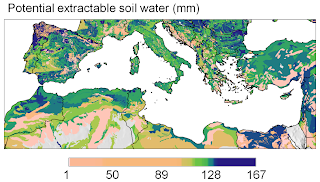
Olive is of major eco-social importance for the desertification-prone Mediterranean Basin, a climate change and biodiversity hotspot of global relevance where remarkable climate change is expected over the next few decades with unknown ecosystem impacts. However, climate impact assessments have long been constrained by a narrow methodological basis (ecological niche models, ENMs) that is correlative and hence largely omits key impact drivers such as trophic interactions and the effect of water availability. To bridge this gap, mechanistic approaches such as physiologically-based weather-driven demographic models (PBDMs) may be used as they embed by design both the biology of trophic interactions and a mechanistic representation of soil water balance. Here we report progress towards assessing climate effects on olive culture across the Mediterranean region using mechanistic PBDMs that project regionally the multitrophic population dynamics of olive and olive fly as affected by daily wea...